
We are not dogs

Updated: Sep 1
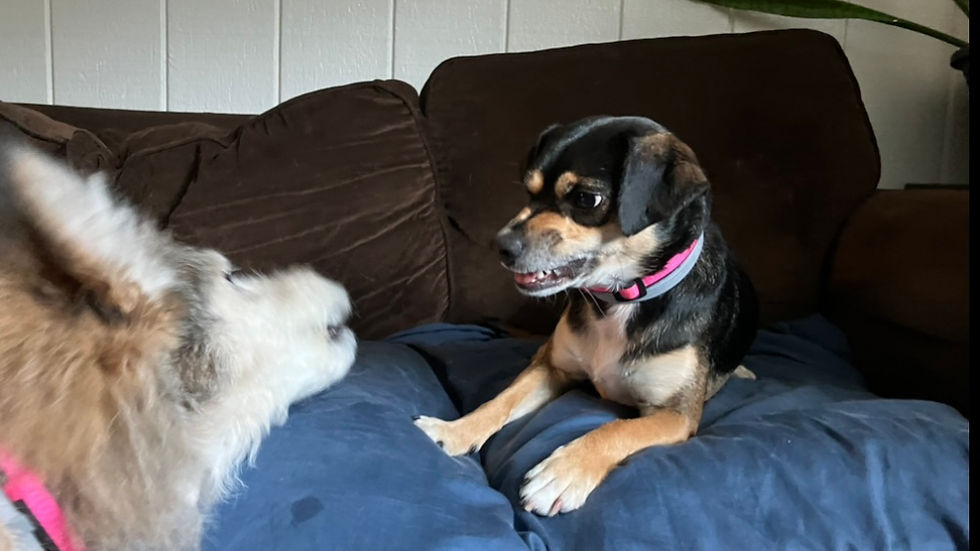
People often support aversive training with the fact that mama dogs correct their pups all the time, and a leash pop, e-collar zap, prong collar poke, etc., all mimic the mom’s snap to their pup’s neck. Or the fact that dogs sometimes use intimidation, fear, and aggression to communicate with another dog. If the mama dogs teaches their pup that way, or dogs teach each other that way, it is only natural that we should teach the pup the same way. I have heard the same argument for horses. If horses can use fear and punishment while setting boundaries with each other, why should human teach the horses through different methods? It all comes down to this: we are not horses, we are not dogs, we are humans.
Dogs (and horses - I obviously can’t discuss anything without bringing horses into it!) communicate with their own species with such nuance that humans could never come close to replicating all the subtleties. Sure we can pick up on some things, the basics of how a species uses body language, energy, tone, etc. But where it gets messy, is us humans thinking a corection or punishment from us means the same to a dog as if it was another dog correcting him. The dynamic between a dog and a human, no matter how close the bond is, will never be the same as between a dog and another dog. We will always be the human, and the dog will always be the dog. It is our jobs as humans to communicate with dogs in a way that prioritizes clarity, compassion, and kindness. We can do the research, follow the science and the evidence, and learn as much as possible about how dogs learn and communicate. We can then take all that information and apply it to our human capabilities and skills. We must work with our dogs from a place of understanding, respecting who they are as a dog, and being clear about who we are as human. This is what leads us to a more trusting and understanding coexistence with our canine partners.


Comments